The Short Answer
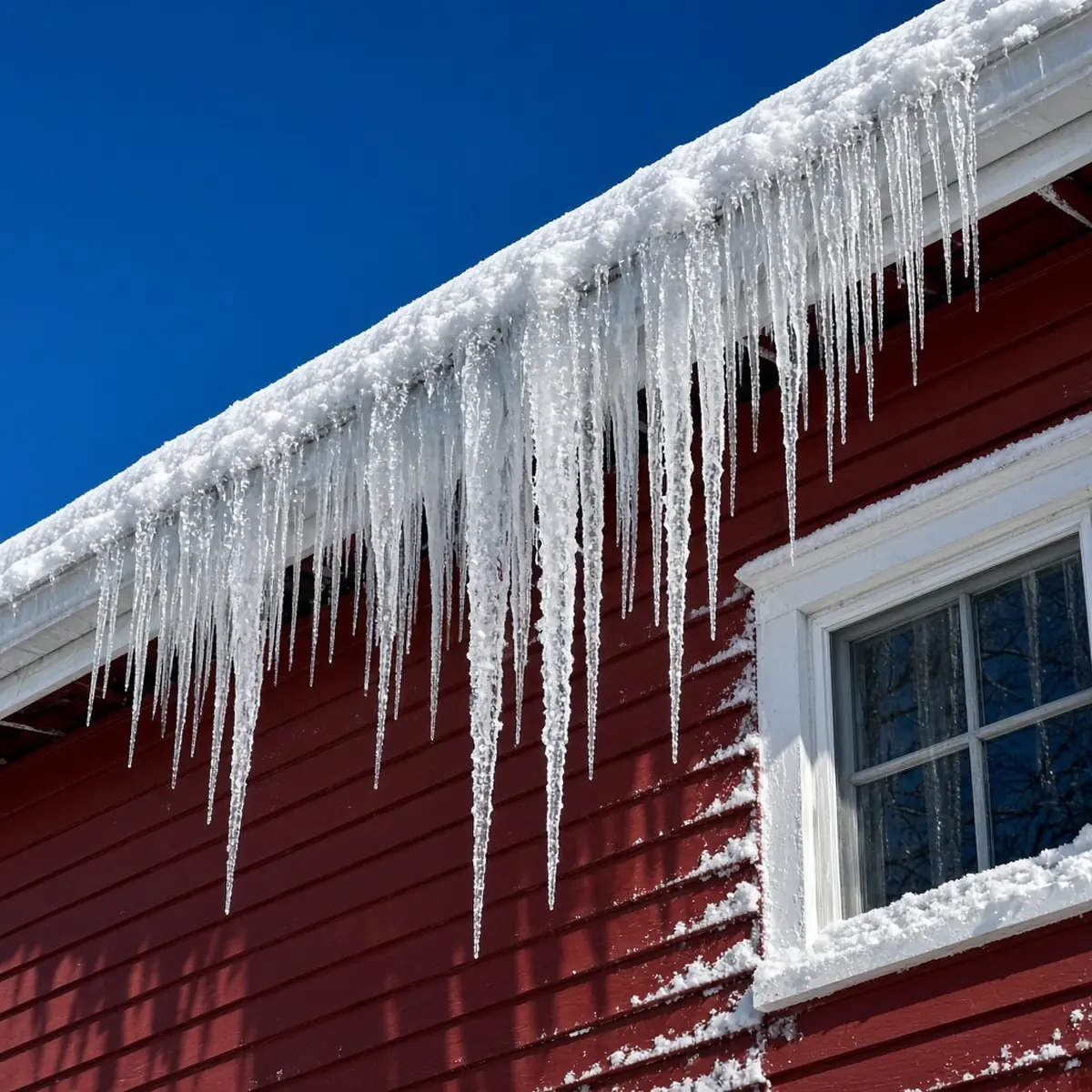
Ice dams form when heat escaping through the roof melts the snow on the upper roof, the meltwater runs down to the cold eave, and it refreezes into a ridge of ice. That ice traps the next round of meltwater, which backs up under the shingles and leaks into the house. Gutters do not cause ice dams and cannot stop them on their own, but clogged or undersized gutters make them worse by holding standing water at the eave. The real fix is a cold roof edge, which comes from attic insulation and ventilation.
How an Ice Dam Forms
An ice dam forms in three stages. First, heat leaking from the living space into the attic warms the upper roof deck, and the snow sitting on it melts from below. Second, that meltwater runs down the slope to the eave and the gutter, where the roof is cold because there is no living space beneath it, and it refreezes. Third, the ice builds into a dam that ponds the next meltwater behind it, and that standing water works under the shingles and into the fascia, soffit and walls.
The pattern repeats every time the sun or a warm spell melts the upper snow and the night refreezes the edge. Plainville's long winter, with months of sub-freezing nights, gives the cycle plenty of chances.
What Gutters Do and Do Not Do
Gutters do not start an ice dam, and new gutters alone will not stop one. The dam forms on the roof above the gutter, driven by heat loss, not by the trough. What a gutter does do is hold water at the eave. A clogged or undersized gutter keeps standing water right where the ice forms, which feeds a bigger dam, while a clear, correctly pitched gutter moves meltwater to the downspouts during every thaw so less of it sits and freezes.
That is why clean, well-sized gutters are part of the picture even though they are not the cure. On Plainville's wooded lots, keeping the trough clear through fall with gutter guards means less debris holding water at the edge going into winter.
How to Keep a Plainville Roof Edge Draining
Keeping a Plainville roof edge draining takes two things working together. First, keep the roof edge cold by sealing attic air leaks, adding insulation, and ventilating the attic so the upper roof does not melt the snow. Second, keep the gutters clear, correctly pitched, and sized to the roof so every thaw's meltwater reaches the downspouts instead of pooling. Correctly sized trough and enough downspouts, paired with a cold roof edge, are what keep the water moving through a Plainville winter.
Signs an Ice Dam Has Already Done Damage
- Water stains on ceilings or walls near exterior edges after a thaw.
- Icicles hanging in a thick row off the gutter line.
- Peeling paint or damp drywall below the roofline.
- Sagging gutters pulled down by the weight of trapped ice.
Any of these after a cold spell points to meltwater getting behind the roof edge. Call 123-456-7890 to reach a local gutter installer in Plainville.
Frequently Asked Questions
Gutters do not cause ice dams. Ice dams form from heat escaping through the roof, which melts upper-roof snow that then refreezes at the cold eave. The dam develops on the roof above the gutter regardless of whether a gutter is there. A clogged or undersized gutter can make a dam worse by holding standing water at the eave, but the cause is roof heat loss, so the fix centers on attic insulation and ventilation, not on removing the gutters.
New gutters will not stop ice dams on their own, because the dam forms from roof heat loss above the trough. Correctly sized and pitched gutters do help by moving meltwater to the downspouts during each thaw, so less water sits at the eave to freeze. The full fix pairs clear, well-sized gutters with a cold roof edge from attic insulation and ventilation, and that combination is what keeps a Plainville roof draining through winter.
You should not remove gutters to prevent ice dams, because gutters do not cause them and removing the trough leaves roof water dropping straight onto the foundation year-round. Ice dams form from heat loss at the roof, so the effective steps are sealing and insulating the attic and keeping the gutters clear and well-pitched. Taking the gutters off trades a winter nuisance for a year-round foundation drainage problem.
You stop water getting behind the gutters in winter by keeping the roof edge cold and the trough clear. Seal attic air leaks and add insulation and ventilation so the upper roof does not melt snow that refreezes at the eave. Keep the gutters clean, correctly pitched, and sized to the roof so meltwater reaches the downspouts. On wooded Plainville lots, gutter guards keep the trough from packing with debris before winter sets in.
Call a Local Gutter Installer in Plainville
Clear, correctly sized gutters are one piece of keeping a Plainville roof edge draining all winter. Call 123-456-7890 to reach a local gutter installer, or see how a full system goes in with gutter installation in Plainville.