
The Short Answer
One failing joint or a single clog is a repair. New gutters make sense when several signs show at once — overflow, sagging, rust, leaking seams, fascia rot, foundation water, or standing water in the trough. When three or four of these appear together on an older system, replacing the gutters costs less effort than chasing leaks every season, and it lets an installer reset the pitch and sizing at the same time.
The Seven Signs
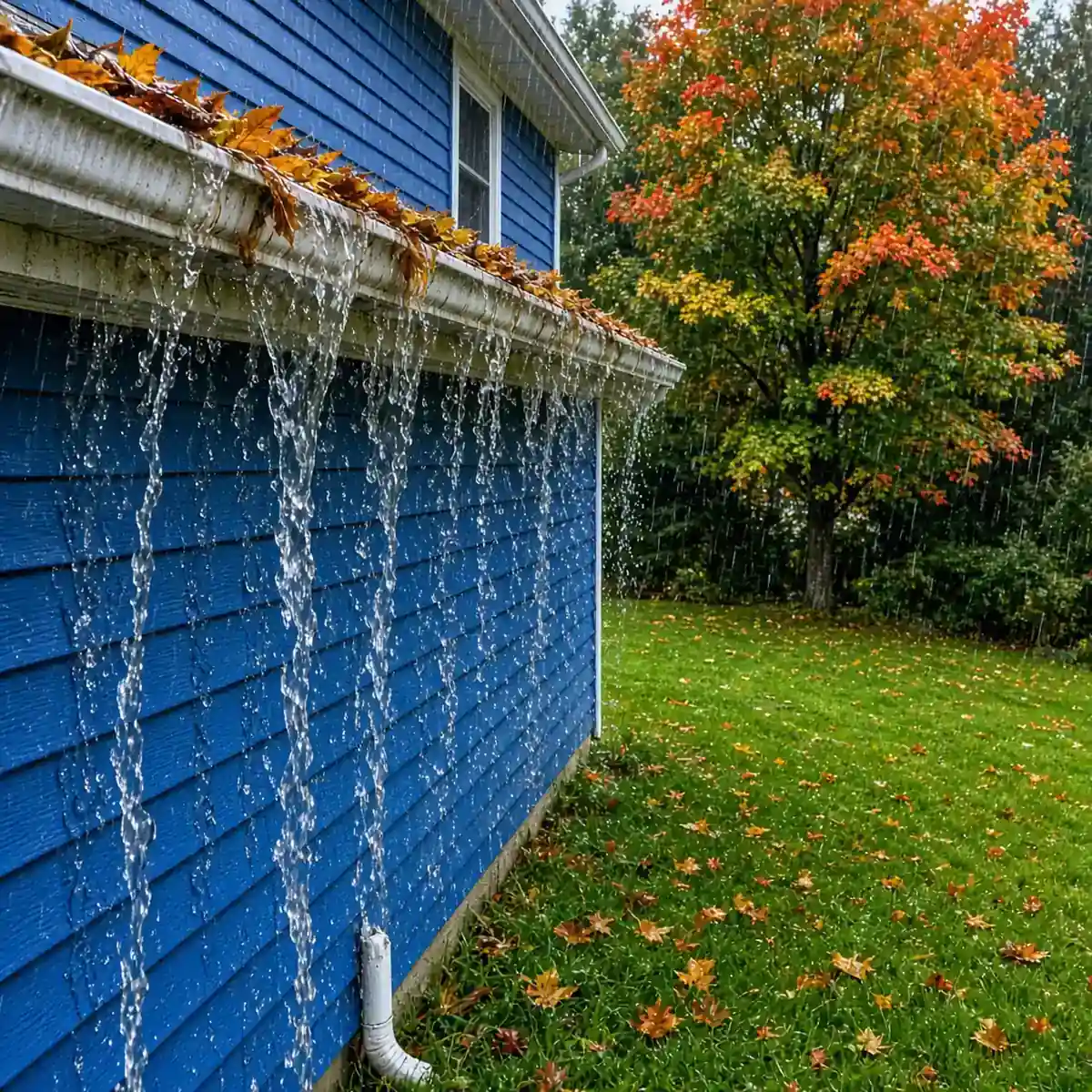
First, water spills over the front edge. If the gutters overflow in rain or a thaw right after cleaning, the trough is undersized, pitched wrong, or worn past the point a clean-out fixes.
Second, the gutters sag or pull away from the fascia. Loose spike-and-ferrule hangers or rotted fascia wood let the run droop, which throws off the pitch and pools water.
Third, seams leak. An old sectional system joined every ten feet eventually drips at the joints, and once several leak, sealing them one by one stops working.
Fourth, rust streaks or holes show. Steel gutters rust from the inside out, and once holes appear, the metal is done.
Fifth, the fascia or soffit shows rot or peeling paint. Water running behind the gutter soaks the wood, and that rot spreads until the backing can no longer hold hangers.
Sixth, water collects at the foundation. Gutters that overflow or dump water at the wall send it to the basement, a real problem on Plainville's slow-draining low ground near the Pequabuck River.
Seventh, water stands in the trough. If water sits in the gutter after rain instead of draining, the pitch is wrong and the run needs to be reset or replaced.
Replace or Repair — How to Decide
Deciding between replace and repair comes down to how many signs show and how old the system is. A single loose joint, one clog, or a short section pulled loose is a repair. But when an older sectional system shows leaks at several joints, sagging in more than one spot, rust, and fascia damage together, it has reached the end of its life. Replacing it with seamless aluminum ends the pattern and resets the pitch, the hangers and the sizing in one job.
Why Plainville's Older Homes Hit These Signs
Plainville's older homes hit these signs because the gutters on them have aged through decades of New England winters. The town's housing skews old — the largest share went up in the 1970s and 1980s — and the original gutters on those homes were undersized steel or early aluminum with spike hangers. Forty-plus winters of freeze, thaw, and snow load work every joint and fastener loose, so the failures tend to arrive together rather than one at a time.
Frequently Asked Questions
Gutters are replaced about every 20 years, though aluminum can last longer and steel less. Age alone is not the trigger — the signs are. When an older system shows leaking seams, sagging, rust, and fascia damage together, it has reached the end of its service life regardless of exact age. On Plainville's many pre-1990 homes, original gutters that have never been replaced are prime candidates.
A single problem — one loose joint, one clog, a short pulled-loose section — calls for a repair. But when several failures show at once on an old system, repeated repairs each season add up to more effort than a replacement, and they never fix the underlying pitch and sizing. Replacing a worn system with seamless aluminum resolves the leaks, sags and overflow in one job rather than patching them one at a time.
If you do not replace failing gutters, the water they should carry ends up against the house. Overflow soaks the fascia and soffit, rotting the wood; water dumped at the base of the wall collects at the foundation and finds the basement, especially on Plainville's slow-draining low ground; and ice builds at the eave in winter. Failing gutters turn a drainage system into a source of damage, so the fixes get more expensive the longer they wait.
Sagging gutters can sometimes be fixed without full replacement if the cause is a few loose hangers and the fascia behind them is still sound. New hidden hangers screwed into solid wood can re-secure the run. But if the fascia has rotted or the gutters sag in several spots along an old sectional system, re-hanging them is a temporary fix, and replacement with seamless trough on repaired fascia is the lasting solution.
Call a Local Gutter Installer in Plainville
If several of these signs show on your home, the gutters have likely reached the end of the line. Call 123-456-7890 to reach a local gutter installer, or see how a new system goes in with gutter installation in Plainville.